Building the Kin-dom in the Here and Now with QueerCrip Beloveds
By Angela Molloy
I grew up as a fifth generation Methodist in a progressive congregation which was relatively affirming of queerness, but where it never felt quite safe to come out, a space which really struggled with my existence in a body disabled from birth. For years well-meaning congregants and clergy preached a gospel of cure, insisting that God did not want me to be disabled so if I just prayed harder or had more faith, my body would be transformed. Their understandings of God’s world and their theologies of suffering were not big enough for bodies like mine. Instead, my body was a problem to be solved, a moral failing that they thought could be remedied if only I believed enough, if only they could successfully intervene.
As Methodists we teach our theology through hymns and stories, turning to scripture, reason, tradition, and experience to make sense of our chaotic world. But throughout my life scripture was preached and hymns were sung in ways that made clear that disability was not something to be desired, using disability as metaphor and pointing to healing passages as proof that disabled people do not belong and are in need of transformation. The queerphobic religious statements of wider U.S. society made clear that queerness, too, was something to be imagined out of God’s preferred future. Such understandings of the Divine never made sense to me because I knew that I too am made in the image of God and I believe in Their expansive Love for all people.
As a young demisexual disabled woman in ministry, I have had my ministry undermined by well-meaning people who openly question my capacity to do the work God has called me to do. I have also had my competencies doubted by some in the queer community who unfortunately, like many straight people, fail to recognize the validity of the asexual spectrum by insisting that my identity is “not queer enough.”
And.
I have been blessed to have my leadership affirmed by congregations, mentors, and chosen family who listen deeply to the queercrip wisdom in my story, who respond with curiosity when there is something that they do not understand, who refuse to stay silent about the injustices within the Church and the world that I, my communities, and other multiply marginalized beloveds are resisting.
General Conference 2020/24 was a sacred, pivotal, far-overdue moment for the UMC and I am beyond grateful for the many ancestors who advocated for decades to help us live into the values and identity God dreams for us. There is not a day that I take this love-and-justice-fueled effort for granted. And. Having now moved from required harm to optional harm, in too many places across the connection dignity and true belonging are still being fought for.
Feminist mujerista theologian Ada Maria Isasi-Díaz coined the term “Kin-dom” in the 1980s as a way of challenging patriarchal understandings of God and of decentering hierarchies of power over others to show how Jesus sought to be in relationship with those cast aside by society. For too long queer and disabled people have been controlled by and cast out from the Church. We have been told that our body-mind-spirits are not welcome and that we do not belong in God’s Kingdom on earth unless we change who we are.
Yet Holy One wants better for us and our communities than to think we are not valued or loved unless we conform.
LGBTQIA+ and disabled people are part of God’s desired future.
Our communities and our world suffer when we limit the expansiveness of God’s love. The Kin-dom hope to which we are called requires us to steadily work for justice.
It is easy to stay quiet about things that do not directly impact us. It takes deep compassion to show up and be loud about the societal violence our governments are enacting on non-normative bodies around the world. These are needed, yet it is harder to grapple with the ways that we participate in maintaining oppressive systems. It takes a special kind of courage to name queerphobia, ableism, misogyny, racism, and the many other -isms within the Church. It is hard to give up some of our privilege, showing up consistently to challenge the status quo even when we are uncomfortable.
Wesleyan theology grounds the believer in the here and now by emphasizing our responsibility to nurture God’s Kin-dom on Earth throughout our lifetimes while also planning for the not yet by encouraging forward-thinking initiatives that respond to the Spirit’s consistent pull toward justice.
I have so much hope in the ways that I see local congregations showing up for one another and their neighbors in the now and the not yet. For the church that just chartered after forming as a house church intentionally rooted in queer inclusion a decade ago. For the church that repents through word weekly for the ways that LGBTQIA+ and other marginalized folx have been told that we do not belong in places of worship and for the tangible ways that they embody these words in their actions. For the many churches and beloveds within them who want to do better and who are turning to the leadership of the most vulnerable instead of assuming to know best.
I dream of a Church which refuses to conform to the unsustainable eurochristian hierarchy of bodies. A Church which demands better for queercrip people and which recognizes that we, too, are made in the imago Dei, rather than attempting to write us out of God's preferred future. I dream of a Church which doesn't just say "All are Welcome," a Church which actively works for justice so that those who society casts out are not just welcome but are actually essential parts of who we are who are missed when absent. I see so much potential for the United Methodist Church to be a place of healing and restoration into community. But to be this place we must be willing to lament and repent of our role in discrimination. We must refuse to be silent in the face of oppression, never prioritizing our comfort, privilege, or desire to maintain a sense of supposed "normalcy" over the Kin-dom work to which God calls us.
I dream of local churches where all body-mind-spirits can thrive, where we work to become physically accessible, yes, but where we also regularly evaluate our attitudes, practices, theologies, and behaviors, listening deeply to the stories of queer and disabled beloveds, taking us seriously when we name systemic and relational harm, and responding with a compassionate commitment to work towards necessary change without judgment or defensiveness. I dream of ordination processes which recognize the gift of queer and disabled leadership, of evaluative boards who see the Spirit moving in the courage and resolve of candidates who have had our calls and embodiments questioned for far too long, of a UMC so emboldened by Holy Mystery's Justice that Bishops can fully consider where clergy will be the best fit rather than having to grapple with the reality that there are still many churches in our connection where it isn't safe to serve in LGBTQIA+. BIPOC, or disabled bodies.
If you are a young LGBTQIA+ or disabled person who has experienced harm or who is wondering about your place in the UMC, I hope you hear me when I say: you, for exactly who you are, are loved, known, and valued by God. Your presence is a gift, and you were never incompatible.
As a queercrip theologian and deacon candidate, hear me when I say: there are so many people working for queer and disability justice in the Church today. We lament the Church’s historical and continuing role in queerphobic and ableist discrimination. We are seeking to do better and are calling the Church to transform, not just in official policy but in everyday praxis. We are working to shift hearts and minds with small, intentional, compassionate, and relational acts, movements that honestly name lingering bias and that commit to necessary transformation.
As we acknowledge and celebrate Pride Month, may we have Pride for the clergy and laity who saw and nurtured belovedness long before our polity caught up. May we have Pride for the complicated history of the UMC in fighting for disability justice and against church exemption from the Americans with Disabilities Act.
May we have Pride for the ways our Church can be a beacon for those who are told by their religious communities that they are worth less and are thus worthless because of what they know to be true about their bodies and identities.
May we have Pride in our vision to love boldly, serve joyfully, and lead courageously, celebrating the progress we have made and honestly acknowledging the work God still has for us to do.
May the love of God be heard in our words, be seen in our actions, and inform our work for justice in community this Pride month and all days.
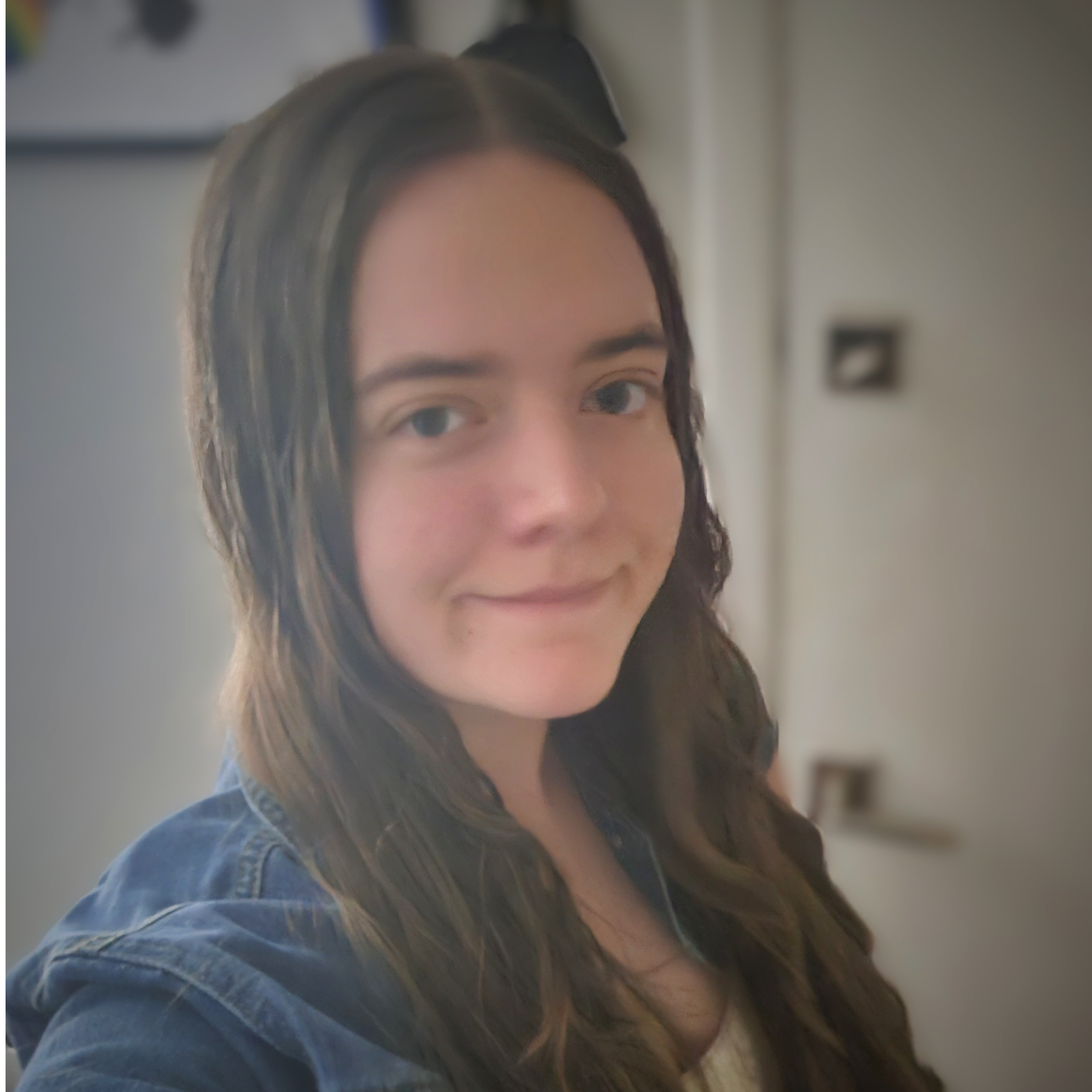
Angela Molloy (she/her)
Angela is a congenitally disabled, fifth-generation Methodist, a second-year PhD student, and chair of the Greater Northwest Disability Ministries Committee. Having been deeply harmed by ableism within the institutional church, Angela seeks to imagine alternative constructive possibilities for disabled and not-yet-disabled folx within communities of faith. Her work examines moral injury, specifically around the ways that queer and disabled bodies have been controlled by and cast out from the church.