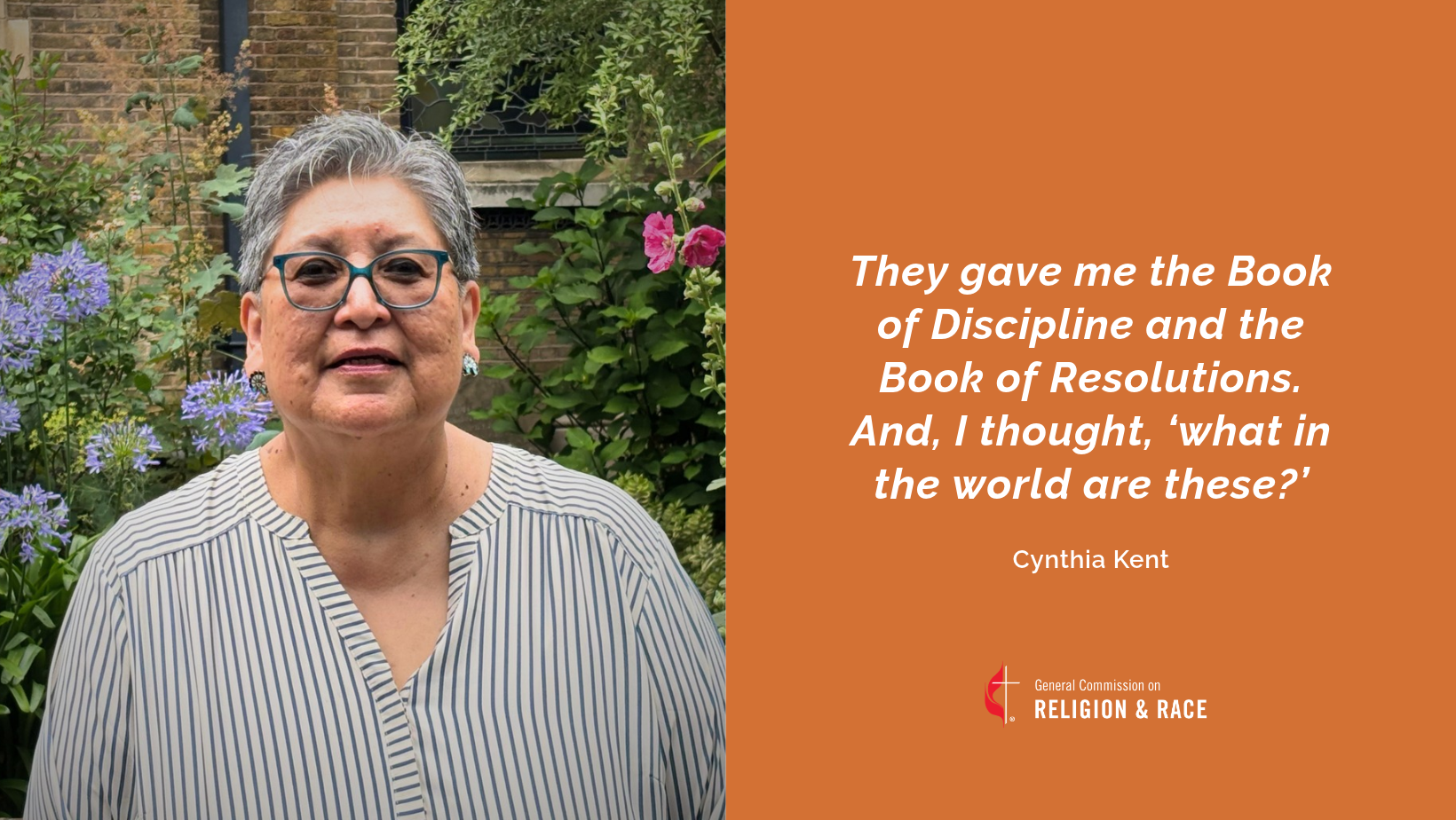
When Cynthia Kent told some United Methodists that she had no idea who or what Methodists were, she was given two books:
“They gave methe Book of Discipline and the Book of Resolutions,” Cynthia says. “And, I thought, what in the world are these?”
By then, Cynthia had gotten to know the Christian Reformed Church, the Pentecostal Church, the Baptist Church, and she grew up in the Catholic Church.
But, she had not known the Methodist Church and she certainly had not expected books like these to get to know it.
“The Book of Discipline, I could figure out because I was used to policy and process with Tribal Law and State Law,” Cynthia says. “But, the Book of Resolution – I cried reading through some of those resolutions.”
Growing Up Ute
As a child growing up on the Southern Ute Reservation in Colorado, Cynthia was used to taking care of other people.
“Every once in a while, as a child, I would wake up with a baby next to me,” Cynthia says. “It was just what we did as a family.”
Her mother was a Community Health Representative. Like a social worker, she had the job of taking temporary custody of children whenever the family situation called for it.
Her cousin was a police officer. She heard many stories from him about families and children who needed care.
Her grandmother was who raised her, really, because her mother was at work. That is how she learned so much about traditional Ute culture from the seniors in her life.
“So, I was a Ute child who attended public school, who was raised Catholic, who also learned about my own traditional ways,” Cynthia says. “And, my dream was to go to school, come back to the Reservation, and become a social worker for my people.”
Finding Her People
But, life did not go that way for Cynthia.
After leaving the Reservation, she was deep in the middle of getting people to vote.
“It was not about who they were voting for,” Cynthia says. “All that we wanted to do was to get people to vote.”
Then, the person running for Lieutenant Governor got in contact with Cynthia with an ask.
“She was asking me to become the Executive Director of the Colorado Commission of Indian Affairs,” Cynthia says. “I was shocked.”
This kind of experience happened again, later on. Cynthia met two individuals who would become her close friends.
“One day, they told me that there was a position opening up in The United Methodist Church that would be perfect for me,” Cynthia says. “But, I had no idea what United Methodist meant.”
So, after reading the Book of Discipline and the Book of Resolution, she was hired as a consultant.
Just Following
In The United Methodist Church, Cynthia has never felt expected to speak for all Native people or answer all questions about them.
“I know that there were others who came before me,” she says. “They were strong in their Native ways and that made a place for me.”
And, in the work of the United Methodist Church itself – the resolutions on Boarding Schools, on Sand Creek, and how the Church is in ministry with people – Cynthia saw the Church’s willingness to work with people on various issues.
As she became more involved in the Church, she found the place where she could be Ute and Christian.
Cynthia says “ I just followed and the Creator led me in the right direction.”