Library
Topics & Types
Search
Premium Resources
All Resources
Video: What is tribalism?
In this conversation recorded in 2023, Bishops Cynthia Moore-Koikoi, Gabriel Unda, and Mande Muyombo define and discuss tribalism.
The current climate of our country and world is deeply polarized and divided, with active efforts to erase cultures and experiences that are not recognized or accepted by the dominant culture. This erasure rejects the beauty of diverse abilities, equitable communities, and intersectional identities. It fosters disconnection, encouraging humanity to deny, dismiss, and erase the image of God in those who do not look like us or share our background and experiences.
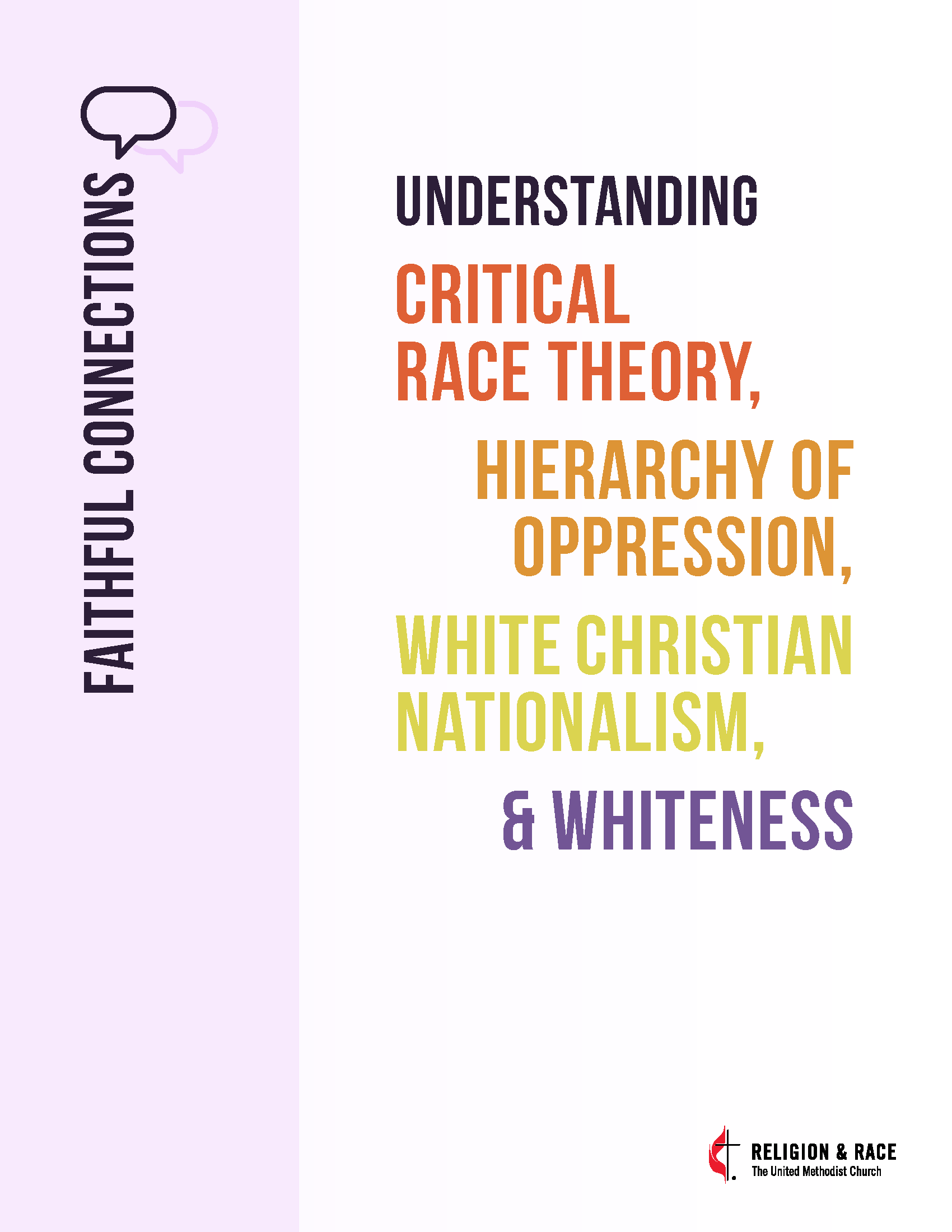
This essay series seeks to engage with terms central to the work of dismantling racism within the global landscape of both church and society.
As an extension of our “What Is?” series, we are pleased to offer GCORR’s Faithful Connections—a deeper exploration of concepts related to institutional equity, antiracism, and tribalism. Each essay examines a term through historical, theological, and experiential lenses, emphasizing the importance of the intersections of faith through the framework of the Wesley Quadrilateral.
What You’ll Find Inside
Pre-work – Comprised of a video link and a general and specific reflection question to orient participant engagement.
Scholarly, In-Depth Essays – Each piece offers historical analysis, theological reflection, and real-world application.
Critical Reflection – Questions guide readers to wrestle with implications for faith, identity, and practice.
Facilitator Support – Designed for seminary classrooms, clergy gatherings, or advanced congregational studies.
Practical Next Steps – Recommendations for moving from theory to action in building just and equitable communities.
Essays in This Series
Critical Race Theory - by Rev. Dr. Mark Grafenreed
Hierarchy of Oppression - by Rev. Enger Muteteke
White Christian Nationalism - by Rev. Dr. Jerome R. Devine
Whiteness - by Katelin Hansen
God Loves Diversity / Dios Ama la Diversidad is a bilingual (English and Spanish) children’s curriculum that celebrates God’s beautiful creation in all its colors, cultures, and stories. Designed for ages 4–10, this five-session series invites children to discover how God made everyone unique and wonderfully different.
Each session explores a core theme of faith and belonging:
God Made Us Different and That Is Good – Discovering that our differences are God’s gifts.
What’s in a Name? – Learning how names and identity reflect God’s love.
Jesus Was a Refugee – Understanding welcome and compassion for those who seek safety.
Stand Up! Speak Up! – Finding courage to speak truth and stand for justice.
Being a Friend – Practicing kindness and peace in our everyday relationships.
Through glow-stick prayers, storytelling, art, and play, children explore diversity as part of God’s design for a loving, inclusive world. Each session follows an easy rhythm—We Gather, We Learn, We Close—with optionalWe Go Deep sections for groups ready to go further.
Whether used in Sunday school, children’s church, or family faith formation,God Loves Diversity / Dios Ama la Diversidad helps young disciples see God’s image in themselves and in others.
Note: This curriculum is a single PDF in two languages (English and Spanish).
The current climate of our country and world is deeply polarized and divided, with active efforts to erase cultures and experiences that are not recognized or accepted by the dominant culture. This erasure rejects the beauty of diverse abilities, equitable communities, and intersectional identities. It fosters disconnection, encouraging humanity to deny, dismiss, and erase the image of God in those who do not look like us or share our background and experiences.
This essay series seeks to engage with terms central to the work of dismantling racism within the global landscape of both church and society.
As an extension of our “What Is?” series, we are pleased to offer GCORR’s Faithful Connections—a deeper exploration of concepts related to institutional equity, antiracism, and tribalism. Each essay examines a term through historical, theological, and experiential lenses, emphasizing the importance of the intersections of faith through the framework of the Wesley Quadrilateral (Scripture, Tradition, Reason, and Experience).
What You’ll Find Inside
Pre-work – Comprised of a video link and a general and specific reflection question to orient participant engagement.
Scholarly, In-Depth Essays – Each piece offers historical analysis, theological reflection, and real-world application.
Critical Reflection – Questions guide readers to wrestle with implications for faith, identity, and practice.
Facilitator Support – Designed for seminary classrooms, clergy gatherings, or advanced congregational studies.
Practical Next Steps – Recommendations for moving from theory to action in building just and equitable communities.
Why This Matters
Faithful Connections challenges readers to move beyond introductory conversations into sustained study and action. By engaging with this resource, leaders will:
Deepen their theological grounding for dismantling racism.
Connect deeper with the lived realities of marginalized communities.
Equip themselves and others for faithful, justice-centered ministry in a polarized world.
Essays in This Series
Ableism – by Rev. Justin Hancock
Beloved Community – by Rev. Dr. C. Anthony Hunt
Equity – by Rev. April Casperson
Intersectionality – by Rev. Dr. Valerie L. Jackson
💡 Faithful Connections is available for purchase at $80. Invest in this advanced resource for your classroom, congregation, or leadership team, and take the next faithful step toward equity and justice.
The General Commission on Religion and Race presents Voices of the Exiled: Navigating Faith in Context, a provocative four-week Bible study that invites us to journey through the Hebrew Scripture with fresh eyes, through the lens of cross-cultural ministry.
What does it mean to live and lead faithfully in a world that often divides us by race, culture, and background? How do we find our voice—and God’s call—when we are called to minister in communities different from our own? What are some of the undergirding tensions that are experienced in serving cross-cultural and cross-racial ministry spaces?
For pastors and congregations engaged in cross-racial/cross-cultural/multicultural ministry, these tensions are more than theological concepts; they are lived realities. As we explore how exile, displacement, and diversity are woven into the biblical story, we’ll reflect on the unique challenges faced leading in diverse contexts.
This study will challenge us to reimagine our mission as a church through four sections - each with a focus topic:
Power - Power Over, Power With, Power Within
Privilege - Problematizing Privilege in the Healing of Naaman
Equity - Speaking our Truth: Equity in the Book of Numbers
Code Switching - Singing the Lord’s Song in a Foreign Land
Each section includes a/an:
Theme Introduction
Opening Prayer/Center Moment
Biblical Text
Introduction to Lesson Goals
Definitions of Key Terms
Historical Context
Cross-Cultural Context
Going Deeper
Reflection Questions
Closing Prayer/Activity
Closing Remarks
Cross-cultural ministry is not new. It is at the very heart of God’s redemptive work. As we wrestle with what it means to “go and make disciples of all nations,” we are reminded that faith was always meant to cross borders, break barriers, and challenge the status quo. This study will challenge us to reimagine our mission as a church—boldly living out the Gospel in a world deeply in need of reconciliation, justice, and radical love.
Join us, as we dare to confront uncomfortable truths, affirm our calling, and seek God’s presence in the liminal spaces of faith and culture. This is the sacred work of the exiled— navigating faith where it is least expected and most needed.
Note: This study is available as a digital download—no printed materials will be shipped.
GCORR invites you to use this Lenten devotional, “Learning Together: A Lenten Exploration of Anti-Racist Values in Matthew, Mark, & Luke,” for personal or congregational use.
This devotional was inspired by a desire to showcase, through the Synoptic Gospels (Matthew, Mark, and Luke), Jesus’ faithful demonstration and engagement of anti-racist values – values of shared power, shared responsibility and authority, and openness and curiosity.
These values are antithetical to the values by which our society is shaped and ruled– values such as power hoarding, individualism, and holding to one right way for doing everything.
Along with the New Revised Standard Version Updated Edition (NRSVUE) and New International Version (NIV), the First Nations Version (FNV), an Indigenous translation of the New Testament, was also used for this Lenten devotional writing.
The purpose of the devotional is three-fold:
To gain a basic biblical understanding that anti-racist values are central to Jesus’ ministry and the gospel message
To integrate anti-racist values and actions into our respective faith journeys
To transform how we engage our faith journeys that reflect the values of this world rather than the values of Jesus
The devotional is structured to follow the six weeks of Lent.The format for each day is as follows:
Opening prayer
Scripture
Short meditation
Closing prayer
GCORR offers tiered pricing as the following, to make this resource accessible for churches of all sizes:
1-100 Members = $55
101-200 Members = $105
201+ Members = $130
Note: This study is available as a digital download—no printed materials will be shipped.
GCORR invites you to use this Lenten devotional, “Learning Together: A Lenten Exploration of Anti-Racist Values in Matthew, Mark, & Luke,” for personal or congregational use.
This devotional was inspired by a desire to showcase, through the Synoptic Gospels (Matthew, Mark, and Luke), Jesus’ faithful demonstration and engagement of anti-racist values – values of shared power, shared responsibility and authority, and openness and curiosity.
These values are antithetical to the values by which our society is shaped and ruled– values such as power hoarding, individualism, and holding to one right way for doing everything.
Along with the New Revised Standard Version Updated Edition (NRSVUE) and New International Version (NIV), the First Nations Version (FNV), an Indigenous translation of the New Testament, was also used for this Lenten devotional writing.
The purpose of the devotional is three-fold:
To gain a basic biblical understanding that anti-racist values are central to Jesus’ ministry and the gospel message
To integrate anti-racist values and actions into our respective faith journeys
To transform how we engage our faith journeys that reflect the values of this world rather than the values of Jesus
The devotional is structured to follow the six weeks of Lent.The format for each day is as follows:
Opening prayer
Scripture
Short meditation
Closing prayer
GCORR offers tiered pricing as the following, to make this resource accessible for churches of all sizes:
1-100 Members = $55
101-200 Members = $105
201+ Members = $130
Note: This study is available as a digital download—no printed materials will be shipped.
GCORR invites you to use this Lenten devotional, “Learning Together: A Lenten Exploration of Anti-Racist Values in Matthew, Mark, & Luke,” for personal or congregational use.
This devotional was inspired by a desire to showcase, through the Synoptic Gospels (Matthew, Mark, and Luke), Jesus’ faithful demonstration and engagement of anti-racist values – values of shared power, shared responsibility and authority, and openness and curiosity.
These values are antithetical to the values by which our society is shaped and ruled– values such as power hoarding, individualism, and holding to one right way for doing everything.
Along with the New Revised Standard Version Updated Edition (NRSVUE) and New International Version (NIV), the First Nations Version (FNV), an Indigenous translation of the New Testament, was also used for this Lenten devotional writing.
The purpose of the devotional is three-fold:
To gain a basic biblical understanding that anti-racist values are central to Jesus’ ministry and the gospel message
To integrate anti-racist values and actions into our respective faith journeys
To transform how we engage our faith journeys that reflect the values of this world rather than the values of Jesus
The devotional is structured to follow the six weeks of Lent.The format for each day is as follows:
Opening prayer
Scripture
Short meditation
Closing prayer
GCORR offers tiered pricing as the following, to make this resource accessible for churches of all sizes:
1-100 Members = $55
101-200 Members = $105
201+ Members = $130
Note: This study is available as a digital download—no printed materials will be shipped.
In this conversation recorded in 2023, Bishops Cynthia Moore-Koikoi, Gabriel Unda, and Mande Muyombo define and discuss tribalism.
Currently at New Resource Pricing at $45
What does it mean to live and lead faithfully when our own biases keep us from being transformed by the Spirit of God at work in and through people of other races, cultures, and backgrounds? How do we discern God’s call within the identities God has given us, especially in a world that may be hostile to the way God created us? What does it look like to honor the lived experiences of others while also valuing and embracing our own? And how can we build relationships across diverse cultures and backgrounds in ways that glorify Christ and Christ’s Church?
Welcome to Transformed Perspectives: Exploring Scripture in Context—a four-week Bible study designed to help us explore Scripture and ministry through the lens of cross-cultural engagement. This journey is not simply an intellectual exercise; it is a sacred invitation to confront our assumptions, to reflect deeply on God’s vision for beloved community, and to practice the spiritual discipline of reconciliation in the face of difference.
For pastors and congregations engaged in cross-racial, cross-cultural, and multicultural ministry, these dynamics are not theoretical—they are lived realities. Together, we will reflect on biblical themes of identity, belonging, bridge-building, and the Spirit’s formation of the early Church to discover how God calls us to shared leadership and faithful love of God and neighbor. In doing so, we will also engage with key concepts such as:
Unconscious bias: the hidden attitudes and stereotypes that can shape relationships and decisions in ways we do not always recognize
Double consciousness: the tension of seeing oneself both through one’s own eyes and through the eyes of a dominant culture, as pastors and leaders of color often experience in cross-cultural contexts
Intersectionality: the ways overlapping identities (race, culture, gender, class, etc.) impact how people experience power, privilege, and marginalization
Relationship capital: the trust, mutual understanding, and deep connections needed to foster authentic community across cultural and racial lines
This study will provide a space to reflect on these dynamics in light of God’s Word, recognizing both the beauty and the complexity of leading and living faithfully in diverse contexts.